Classical Et Cetera
Join the educators, authors, publishers, and visionaries at Memoria Press to unpack and understand the world of classical education.
Listen on:








Episodes

Wednesday Sep 24, 2025
Wednesday Sep 24, 2025
In this special mailbag episode of Classical et Cetera, we are answering questions straight from our listeners! From classical education and the history of philosophy to standardized testing and watching movies, nothing is off limits. Join the rapid fire and ask us more questions by emailing us at podcast@memoriapress.com.
Thanks for your question, Patricio! The book Martin mentioned is The Seven Liberal Arts: A Study in Medieval Culture by Paul Abelson.
Other materials we talked about today:
Anne of Green Gableshttps://www.memoriapress.com/curriculum/literature-and-poetry/sixth/anne-of-green-gables-set/?utm_source=PodBean&utm_medium=CETC&utm_campaign=188
Famous Men & Classical Studieshttps://www.memoriapress.com/classical-studies/?utm_source=PodBean&utm_medium=CETC&utm_campaign=188
First Form Greekhttps://www.memoriapress.com/curriculum/greek/first-form-greek-complete-set/?utm_source=PodBean&utm_medium=CETC&utm_campaign=188
00:00 Introduction01:40 What We're Reading06:18 Ask Us Anything! Classical Et Cetera Mailbag
What We're Reading from This Episode:
The Idiot—Fyodor Dostoevsky (Martin)
The Glass Bead Game (Magister Ludi) —Hermann Hesse (Martin)
The Unselected Journals of Emma M. Lion —Beth Brower (Tanya)
Anne of Green Gables —L.M. Montgomery (Tanya & Paul)
Wednesday Sep 17, 2025
Wednesday Sep 17, 2025
Why do students in classical education memorize all 70 stanzas of Thomas Babington Macaulay’s Horatius at the Bridge? In this episode of Classical Et Cetera, we explore one of the most demanding—and most rewarding—academic challenges that we give our students: the recitation of Horatius.We trace the story of Horatius and its place in Roman legend, consider why Winston Churchill himself memorized the poem, and explain how this tradition became the "Winston Churchill Award" for our students today. Along the way, we reflect on how memory work builds courage, confidence, and leadership, shaping students to take on challenges far beyond the classroom.This conversation also looks at why classical Christian education prizes memorization as “mental furniture,” especially in an age of Google and smartphones when it is tempting to outsource our minds. From ancient Roman heroism to modern homeschool recitations, Horatius at the Bridge shows why memory work remains central to classical education and why it continues to inspire both students and families.Purchase our Horatius at the Bridge Set today! https://www.memoriapress.com/curriculum/classical-studies/horatius-bridge/?utm_source=PodBean&utm_medium=CETC&utm_campaign=187
Read the article from former Assistant Secretary of State, Robert B. Charles: https://www.memoriapress.com/articles/horatius-bridge-0/?utm_source=PodBean&utm_medium=CETC&utm_campaign=187
What We're Reading from This Episode:
The Idiot—Fyodor Dostoevsky (Martin)
Men Against the Sea—Charles Bernard Nordhoff (Martin)
The Unselected Journals of Emma M. Lion—Beth Brower (Tanya)
Education of a Wandering Man—Louis L'Amour (Paul)
Around the World in Eighty Days—Marian Leighton (Paul)
The Human Factor—Graham Greene (Paul)
Wednesday Sep 10, 2025
Wednesday Sep 10, 2025
What does it mean to teach history truthfully? In this episode of _Classical Et Cetera_ , we tackle how to teach Christopher Columbus facts with honesty, from elementary school to teaching history in middle school and high school. We discuss the hard truths of American slavery, the Holocaust, and more, while still cultivating gratitude for the US. Drawing on models like the Frederick Douglass 4th of July speech, we share practical ways to guide students through the dark parts of history so they see both the good and the bad—growing in wisdom, empathy, and conviction.
*What We're Reading* from This Episode:
_Education of a Wandering Man_—Louis L'Amour (Paul)
_The Unselected Journals of Emma M. Lion_—Beth Brower (Tanya)
_On the Consolation of Philosophy_—Boethius (Dustin)
Wednesday Sep 03, 2025
Wednesday Sep 03, 2025
On this week's Classical Et Cetera, Memoria Press takes on one of our most common questions in classical Christian education: Why should Christians study paganism at all?
We explore how to approach pagan philosophy, literature, and Greek mythology in the classroom, and why these texts still matter for students learning within the tradition of Christianity. From Plato and Aristotle to Paul at the Areopagus, we consider how pagan authors asked the right questions—and how the Bible is where we ultimately get the answers.
Whether you’re a homeschool parent, a teacher, or simply curious about classical education, this conversation will help you see how pagan works can be taught with discernment, why they remain part of a Memoria Press curriculum, and how to read them in light of the truth of Christianity.
Read "Why Should Christians Read the Pagan Classics" from our founder, Cheryl Lowe: https://www.memoriapress.com/articles/why-should-christians-read-pagan-classics/?utm_source=PodBean&utm_medium=CETC&utm_campaign=185
*What We're Reading* from This Episode:
_The Unselected Journals of Emma M. Lion_—Beth Brower (Tanya)
_The Human Factor_—Graham Greene (Paul)
_Around the World in Eighty Days_—Jules Verne (Paul)
_The Idiot_—Fyodor Dostoevsky (Martin)
Wednesday Aug 27, 2025
Wednesday Aug 27, 2025
Who were the Founding Fathers — and what is the education that shaped them? In this episode of _Classical Et Cetera_ , we explore the rigorous classical education that influenced America’s founders and the birth of a nation. From learning Latin and Greek to studying history and literature, the Founders gained the wisdom and discipline to lead with courage and conviction. We discuss what their colonial education looked like, why it mattered, and how modern schools and families can recover the same focus and depth. Join the conversation and discover what classical learning can offer today’s America!
*What We're Reading* from This Episode:
_The Hobbit_—J.R.R. Tolkien (Paul)
_The Human Factor_—Graham Greene (Paul)
_The Father's Tale_—Michael D. O'Brien (Tanya)
_The Iliad_—Homer (Martin)
_The Idiot_—Fyodor Dostoevsky (Martin)
Vulgate Set - https://www.memoriapress.com/curriculum/latin/selections-from-the-vulgate-set/?utm_source=PodBean&utm_medium=CETC&utm_campaign=184
Martin's article - https://www.memoriapress.com/articles/classical-education-founding-fathers/?utm_source=PodBean&utm_medium=CETC&utm_campaign=184
Wednesday Aug 20, 2025
Wednesday Aug 20, 2025
This week's Classical Et Cetera is our official back-to-school episode! Join us as we consider not just dates on a calendar but the seasonality of school itself. Where does the fall start come from? Is it better to start early or wait for the first cool mornings of autumn? Let's talk about practical guidance for starting the school year, everything that you should consider, and how to begin with purpose.
https://www.memoriapress.com/curriculum/classical-studies/timeline-program/?utm_source=PodBean&utm_medium=CETC&utm_campaign=183
*What We're Reading* from This Episode:
_The Hobbit_—J.R.R. Tolkien (Paul)
_The Father's Tale_—Michael D. O'Brien (Tanya)
_From Aristotle to Christ_—Louis Markos (Martin)
_Smiling Through the Cultural Catastrophe_—Jeffrey Hart (Martin)
Wednesday Aug 13, 2025
Wednesday Aug 13, 2025
Where should adults start with classical education? In this episode of Classical Et Cetera, we share our top book recommendations for anyone looking to begin their journey into the world of classical learning. Whether you're new to the classics or returning with fresh eyes, these books will help you understand what classical education is, why it matters, and how to dive in. From timeless works to essential guides, we explore where to start, what to read, and how to keep going. Join the conversation in this podcast episode—and check out our Latin programs right here! https://www.memoriapress.com/latin?utm_source=PodBean&utm_medium=CETC&utm_campaign=182
*What We're Reading* from This Episode:
_Captains Courageous_—Rudyard Kipling (Paul)
_The Master and Margarita_—Mikhail Bulgakov (Ian)
_The Gormenghast Trilogy_—Mervyn Peake (Ian)
_The Covenant of Water_—Abraham Verghese (Ian)
_Mythology_—Edith Hamilton (Martin)
_The Story of Themistocles_—Plutarch (Martin)
_Dominion_—Tom Holland (Martin)
_The Greeks and the Irrational_—E.R. Dodds (Martin)
Wednesday Aug 06, 2025
Wednesday Aug 06, 2025
Curious what a liberal arts education really is? What trivium and quadrivium mean? In this episode of Classical Et Cetera, we unpack the historic meaning of the liberal arts and explain how they shaped true classical education for centuries. Forget the modern idea of a liberal arts degree—we go back to the medieval roots where grammar, logic, rhetoric, arithmetic, geometry, music, and astronomy were used to form free minds, not just earn diplomas. From misunderstood terminology to how the liberal arts were originally practiced, this episode is a deep dive into the foundations of Western learning. Whether you’ve always wanted it explained, or you’re trying to understand the difference between today’s “classical schools” and original liberal arts, this conversation will help you rediscover an education that’s truly more than a degree.
https://www.memoriapress.com/articles/what-are-the-liberal-arts/?utm_source=PodBean&utm_medium=CETC&utm_campaign=181
*What We're Reading* from This Episode:
_The Father's Tale_—Michael O'Brien (Tanya)
_Why Choose the Liberal Arts_—Mark William Roche (Paul)
_The History of Tom Jones, a Foundling_—Henry Fielding (Martin)
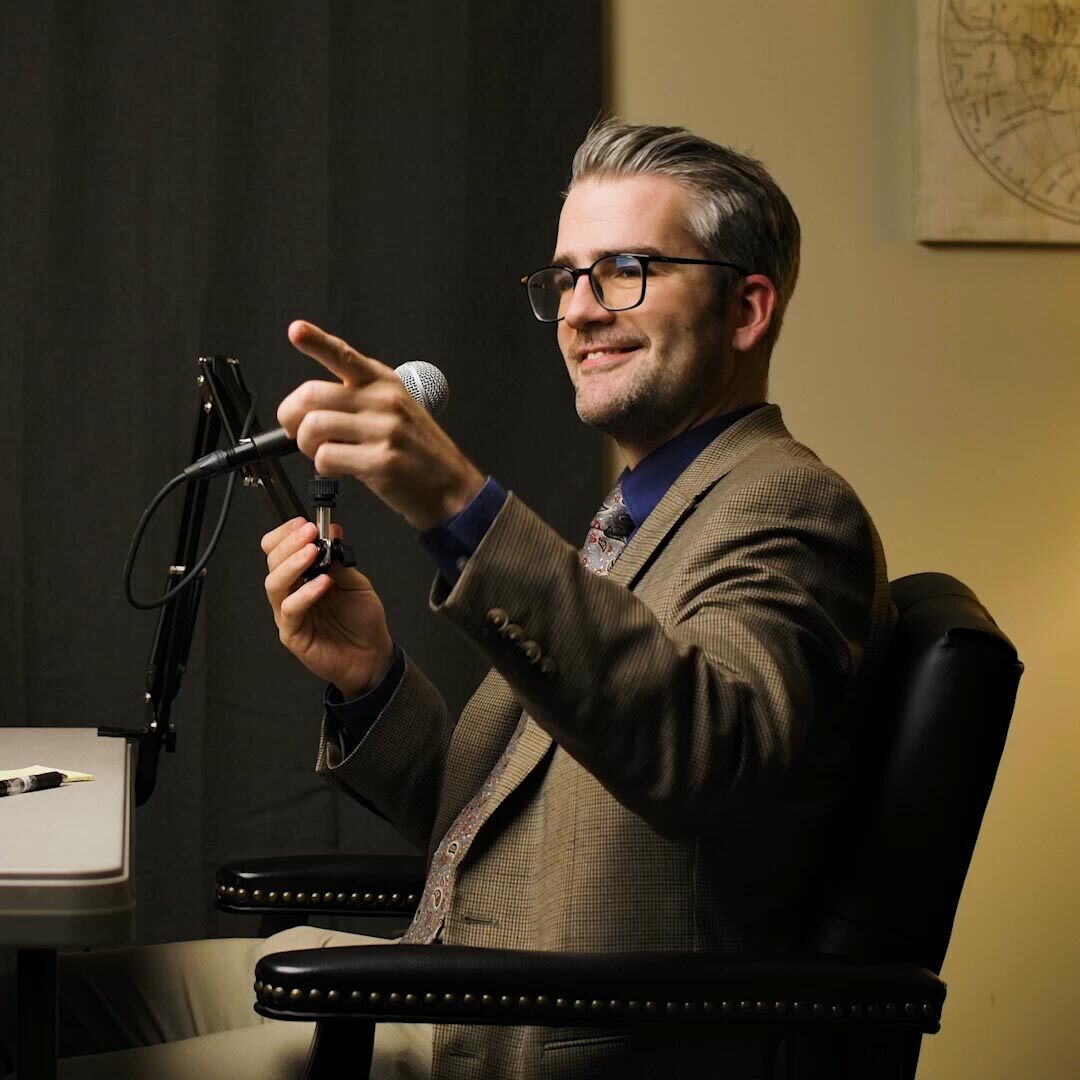
Welcome to Classical Et Cetera
Welcome to The Great Conversation. CETC brings together leading voices from the world of classical education to understand and engage with the good, the true, and the beautiful.
Join Shane Saxon as he sits down with experts, educators, and prominent voices in the world of Classical Education as they seek to discover a better education for a modern context by uncovering the philosophical foundations of the ancient world.
New episodes every Thursday on Spotify, YouTube or wherever you get podcasts!